Loading…
Destination
Spain travel itineraries
Plan your trip to Spain — recommended 10-14 days, best in april–june and september–october (shoulder season) — mild weather, fewer crowds, festivals.
Compiled by TripSet · Last reviewed: July 2026
About Spain
Spain occupies most of the Iberian Peninsula in southwestern Europe, sharing the landmass with Portugal and separated from North Africa by only 14 kilometres at the Strait of Gibraltar. That geography — plus centuries of Roman, Visigothic, Moorish, and imperial layers — has produced one of the most regionally distinct countries in Europe. Andalusia in the south feels North African at the edges; Catalonia in the northeast has its own language and identity; Galicia in the northwest is Atlantic and Celtic. A trip to Spain is really a trip to a specific region, not a country.
Most first-time itineraries pick one of two backbones. The classic loop combines Madrid, Toledo, Córdoba, Seville, and Granada — imperial capital plus the great Moorish cities of Andalusia — often ending on the Costa del Sol. The alternative starts in Barcelona for Gaudí and coastal Catalonia, adds Valencia or the Costa Brava, and connects to Madrid via AVE high-speed train (2h 30m). Two weeks lets you combine both if you keep moving; three weeks opens up the north — San Sebastián for pintxos and beaches, Bilbao for the Guggenheim, or Santiago de Compostela at the end of the Camino.
Spain rewards travelers who split their trip — one city plus one region beats trying to see the whole country in two weeks.
Practical realities: Spain runs on its own clock. Lunch is 2–4 pm, dinner rarely before 9 pm, and shops in smaller cities still close for siesta from roughly 2 to 5. The AVE high-speed rail network is one of the best in Europe and makes intercity travel painless — book in advance for the cheapest fares. Pickpocketing in Barcelona's metro and around Madrid's tourist sites is the main safety issue; violent crime is very rare. Tap water is safe everywhere on the mainland.
Food is central to any Spain trip and varies sharply by region — jamón and tapas in Andalusia, paella and horchata in Valencia, pintxos in San Sebastián, seafood in Galicia, cocido in Madrid. Menú del día — a fixed-price weekday lunch of two or three courses with bread and a drink — is the best-value way to eat well; long, late dinners at tapas bars are the default in the evening. Wine regions — Rioja, Ribera del Duero, Priorat — are excellent side trips for anyone with a rental car and a spare weekend.
Spain travel tips
- 1
Book AVE high-speed train tickets 30–60 days ahead for the cheapest fares — Renfe releases limited "Promo" fares that sell out fast on popular routes like Madrid–Barcelona and Madrid–Seville.
- 2
Order the "menú del día" for lunch — a three-course meal with bread and a drink at a fixed price, available in almost any non-touristy restaurant Monday to Friday. Best value in Spanish dining by a wide margin.
- 3
On Barcelona's metro (especially Line 3 to the airport and around Plaça de Catalunya), keep phones and wallets out of back pockets and bags zipped in front. Pickpocket teams work with distractions — someone bumps or spills, someone else lifts.
- 4
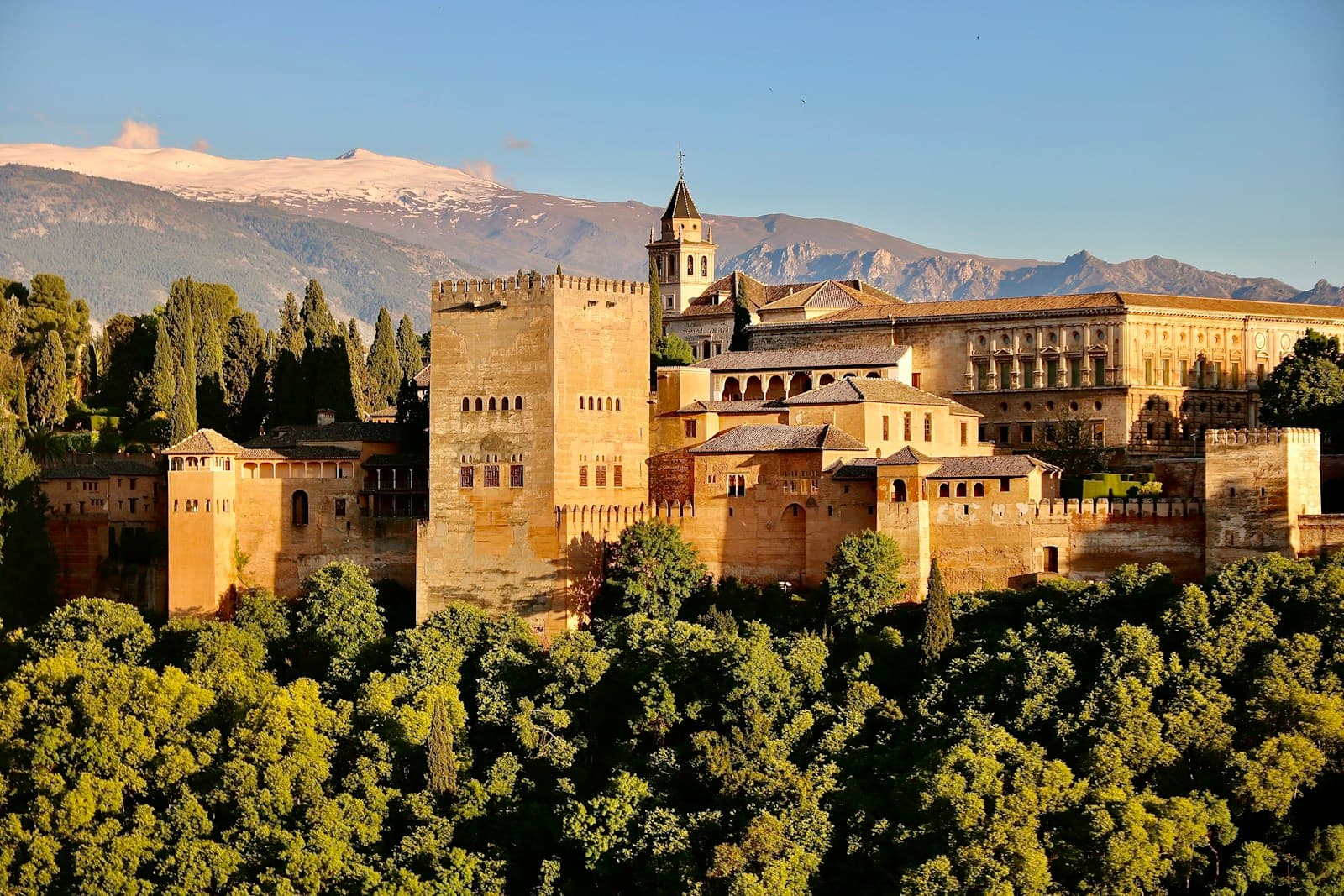
Book the Alhambra online at least 2–3 months in advance. Same-day tickets are almost impossible in high season, and the Nasrid Palaces have timed entry that fills first.
- 5
Adjust to the eating clock — lunch is 2–4 pm, dinner rarely before 9 pm. Kitchens between those windows are usually closed except in tourist areas. Tapas bars bridge the gap all afternoon.
- 6
Small change matters in cafes and taxis — many still prefer cash for coffee, tapas, or short rides even in Madrid and Barcelona. Cards are universal in restaurants and shops but keep some cash daily.
Plan your Spain trip with TripSet
Copy any itinerary
Pick a real Spain trip from the list below and duplicate it into your account — all days, stops, hotels, and transport included.
Import your bookings
Upload your flight, train, or hotel confirmation PDF — AI reads it and fills in all the details automatically. No manual entry.
Learn more →Invite & collaborate
Travelling with others? Add co-editors — everyone sees changes in real time. Share a read-only link with anyone.
Learn more →Export & share
Download as KML (Google Maps, Organic Maps) or GPX (Garmin, OsmAnd, Strava) for offline navigation — or export as an animated video.
Learn more →Itineraries from Spain
No published itineraries yet. Browse all.
Best time to visit Spain
April–June and September–October (shoulder season) — mild weather, fewer crowds, festivals
Jan
Okay
Feb
Okay
Mar
Good
Apr
Exce
May
Exce
Jun
Exce
Jul
Okay
Aug
Okay
Sep
Exce
Oct
Exce
Nov
Good
Dec
Good
ExcellentGoodOkayAvoid
- Jan, Feb: Cold in centre and north; mild in Andalusia and Canaries
- Mar: Semana Santa (Holy Week) — book early
- Jun: Warm, ideal for beaches and cities
- Jul: Very hot inland (Seville 40°C+), coasts crowded
- Aug: Very hot inland, peak crowds and prices
- Sep: Ideal — warm, calmer crowds, harvest festivals
- Nov: Cool and quieter; still pleasant in the south
- Dec: Cold in centre; Christmas markets and lights in cities
Frequently asked questions
7 days lets you focus on one city with a day trip (Madrid + Toledo, or Barcelona + Costa Brava). 10–14 days covers a classic loop: Madrid, Seville, Granada, Barcelona linked by high-speed train. 3 weeks lets you add the north (San Sebastián, Bilbao) or Andalusia in depth. Spain is bigger than most travelers assume — trying to see everything in two weeks means seeing nothing properly.
Planning your own Spain trip?
Copy any itinerary above, or start from scratch — free, no credit card.
Start planning