Loading…
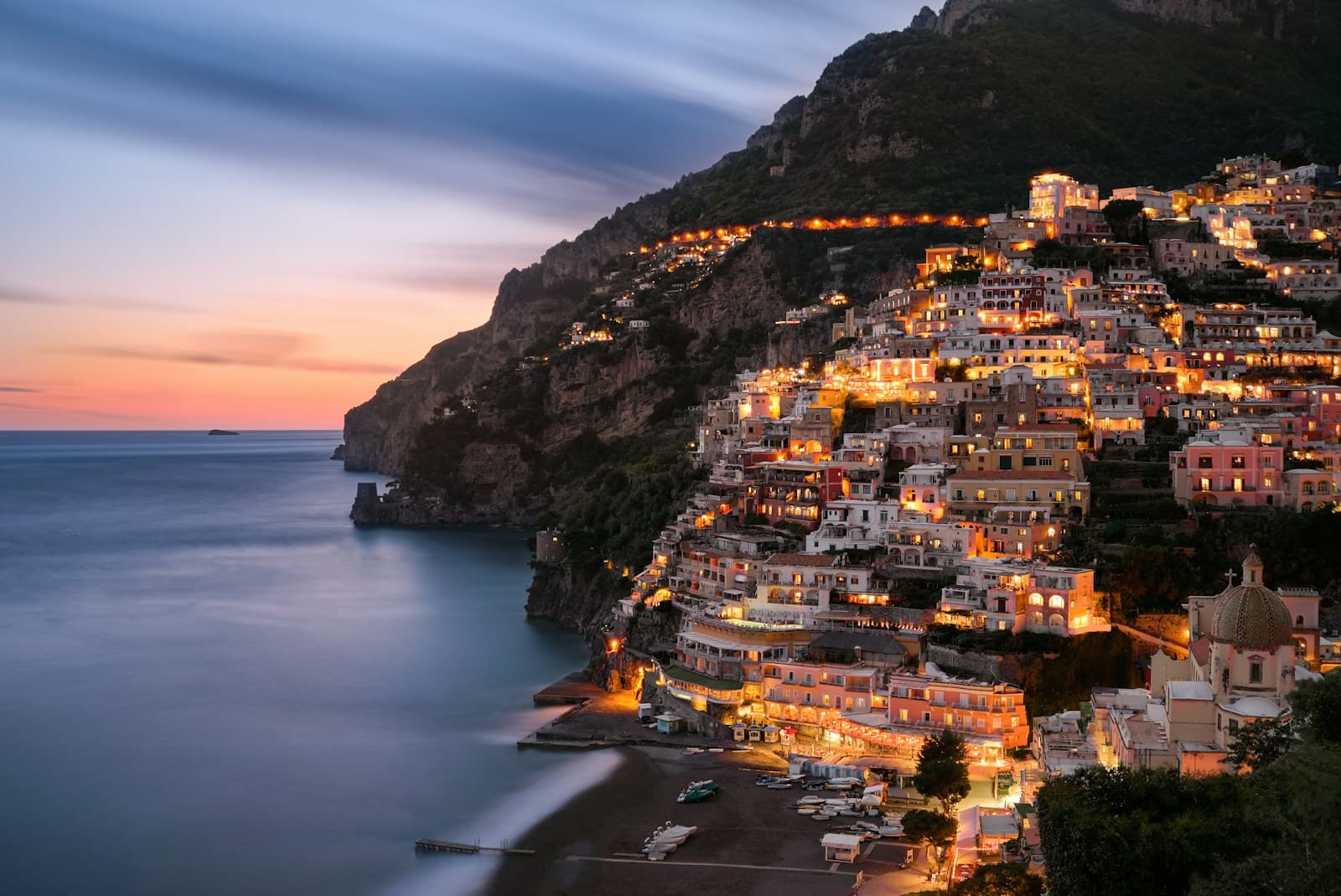
Destination
Italy travel itineraries
Plan your trip to Italy — recommended 10-14 days, best in april–june and september–october — warm weather, harvest festivals, lighter crowds than peak summer.
Compiled by TripSet · Last reviewed: July 2026
About Italy
Italy is a boot-shaped peninsula in southern Europe stretching from the Alps to Sicily, with two major islands (Sicily and Sardinia) and roughly 7,600 kilometres of Mediterranean coastline. Twenty regions — each with its own dialect, cuisine, and character — pack more UNESCO World Heritage sites than any other country. The result is a place where a two-hour drive can take you from Alpine ski resorts to Renaissance city-states to Baroque fishing villages, and each has strong opinions about what "real Italian food" means.
The classic first-time trip is a triangle: Rome, Florence, and Venice, linked by high-speed train in 90 minutes each hop. Ten days lets you add either Naples and the Amalfi Coast (south) or Milan and the Cinque Terre (north). Two weeks opens up Tuscany hill towns, Puglia's trulli villages, or Sicily's Greek temples and street food. Three weeks or more starts to justify Sardinia, the Dolomites, or a slow drive through Umbria. Longer trips consistently outperform shorter ones — Italy punishes travelers who try to check off cities.
Italy compresses more art, food, and history per kilometre than almost anywhere on Earth — the mistake is trying to see it all in one trip.
Practical realities: Trenitalia and Italo high-speed trains (Frecciarossa, Italo) are the best way between major cities — book 30–60 days ahead for cheap fares. Regional trains are inexpensive but slower and less reliable. Driving is essential in Tuscany, Puglia, and Sicily but a liability in cities — historic centres are Zona a Traffico Limitato (ZTL) with automatic fines for unauthorized entry. Pickpocketing around the Colosseum, Trevi Fountain, Rialto Bridge, and on Rome bus 64 is the biggest safety issue. Tap water is safe and delicious everywhere.
Food is not a category — it is the entire trip. Regional loyalty is intense: order carbonara in Naples and locals will politely correct you; ask for pineapple pizza anywhere and they will not. Coffee is standing-room at the bar for around a euro (with a small extra charge for table service); dinner starts at 8 pm; and the coperto (a small per-person cover charge) on your restaurant bill is not a scam. August 15 (Ferragosto) is when Italians take vacation — many family-run restaurants and shops close for the whole month, especially in the south.
Italy travel tips
- 1
Book Frecciarossa and Italo high-speed trains 30–60 days ahead — advance "Promo" fares are a fraction of the walk-up price on popular Rome–Florence, Rome–Milan, and Rome–Venice routes. Both operators run comparable service on the same routes; compare prices on ItaliaRail or directly on each site.
- 2
Never drive into historic city centres — Florence, Bologna, Milan, Naples, and most Tuscan hill towns are ZTL (Zona a Traffico Limitato) with automatic camera enforcement. Substantial fines arrive in the post to your rental agency months later, one per unauthorized entry.
- 3
Book Colosseum, Uffizi, Vatican Museums, and Last Supper tickets weeks in advance — same-day tickets sell out in high season and skip-the-line entry is worth the small surcharge. The Uffizi and Accademia in Florence require timed entry booking, not just tickets.
- 4
On Rome bus 64 (Termini to Vatican), around the Colosseum, in Venice around San Marco and Rialto, and at Naples train stations, keep your bag zipped and in front. Pickpocket teams work with distraction — a petition, a bumped shoulder, a spilled drink — while a second person lifts your wallet or phone.
- 5
Drink coffee standing at the bar — table service adds a surcharge that can double the price. Ordering a cappuccino after 11 am marks you as a tourist; espresso, macchiato, or corretto are the afternoon and evening drinks.
- 6
Avoid restaurants with waiters actively pulling in tourists, laminated multi-language menus with photos, and prime locations facing a major sight — these almost always disappoint. Walk two or three streets away, look for handwritten menus in Italian, and check that locals are eating there.
Plan your Italy trip with TripSet
Copy any itinerary
Pick a real Italy trip from the list below and duplicate it into your account — all days, stops, hotels, and transport included.
Import your bookings
Upload your flight, train, or hotel confirmation PDF — AI reads it and fills in all the details automatically. No manual entry.
Learn more →Invite & collaborate
Travelling with others? Add co-editors — everyone sees changes in real time. Share a read-only link with anyone.
Learn more →Export & share
Download as KML (Google Maps, Organic Maps) or GPX (Garmin, OsmAnd, Strava) for offline navigation — or export as an animated video.
Learn more →Itineraries from Italy
No published itineraries yet. Browse all.
Best time to visit Italy
April–June and September–October — warm weather, harvest festivals, lighter crowds than peak summer
Jan
Okay
Feb
Okay
Mar
Good
Apr
Exce
May
Exce
Jun
Exce
Jul
Okay
Aug
Okay
Sep
Exce
Oct
Exce
Nov
Good
Dec
Good
ExcellentGoodOkayAvoid
- Jan: Cold in the north; mild in Sicily and the south
- Feb: Carnival in Venice — book far in advance
- Apr: Easter can be busy — book early
- May: Ideal — warm, wildflowers, manageable crowds
- Jul: Very hot in cities, coasts crowded and expensive
- Aug: Very hot, Ferragosto (Aug 15) — many family businesses close, tourist areas jammed
- Sep: Ideal — warm, harvest season, thinner crowds
- Nov: Cooler, quieter, olive harvest
- Dec: Christmas markets and lights in cities
Frequently asked questions
7 days covers the classic Rome–Florence–Venice triangle if you keep moving. 10–14 days lets you add either the south (Naples, Pompeii, Amalfi Coast) or the north (Milan, Lake Como, Cinque Terre). 3 weeks lets you go deeper into one region — Tuscany hill towns, Puglia, or Sicily. Most travelers try to see too much and remember airports and train stations more than the places themselves.
Planning your own Italy trip?
Copy any itinerary above, or start from scratch — free, no credit card.
Start planning